Heat by Bill Buford - Review
A year in the kitchen at Babbo becomes an exploration of mastery, tradition, and the idea that true understanding follows experience.
October 13, 2026
Can you fully know something without having lived it? I think most sane people may say you can achieve a fairly decent approximation that will get you most of the way there. Parsing through Bill Buford’s works, it’s evident that he may firmly disagree. The longtime New Yorker editor has built his bibliography around this conceit that to do is to know.
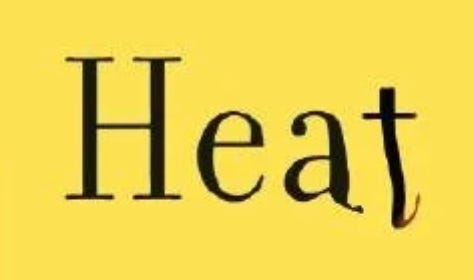
And in Heat, his second book, he does the admirably insane and steps down from his day-to-day career to work for no pay as “kitchen bitch” at Babbo, an Italian restaurant in New York City run by famed restaurateur Mario Batali.
To Buford’s credit, this is not a light stint in a kitchen where he is content to buzz around the kitchen like a fly, scribbling some notes, and squeezing out a hundred thousand words to take to print, before heading back to the land of the living. No! This maniac spends an entire year in a baptism by fire, voraciously learning how to man every station he can (or, at least what they’ll allow him to man).
It’s a fascinating chronicle to read this man dive into the deep end of a shark-infested pool, with no professional kitchen experience—in an environment that was operating on a level that demanded perfection. This restaurant was no slouch; the Michelin Guide opened in New York City in 2005, and Babbo found itself with a star shortly thereafter.
Heat shines brightest when Buford focuses the spotlight on the kitchen staff at Babbo: the dedication and the professionalism this team gives to their craft. But while it’s not the merry band of pirates from Bourdain’s Kitchen Confidential, the office politics and workplace drama simmers beneath. Everyone has their job and their agenda, and there’s conflict when they get in the way of each other’s jobs getting done to the level they expect of themselves.
And plopped right in the middle of all of that is a journalist who’s only there to slow them down. But as he finds his footing in the kitchen, developing the confidence to man the stations by himself without covering himself in burns and welts or slicing his fingers open (which happens a lot by the way; like, a lot!), the dynamics change. He becomes a member of the team. A trusted resource, and a friend.
The book meanders a bit in the second half when Buford—hungry for more—travels to Italy. Babbo gave him a clear directive, clear structure, clear progression. It’s compelling. The Italian chapters are more episodic and often find themselves lost in the lack of structure. There’s long winding passages about the veracity of Catherine de’ Medici’s role in the concurrent downfall of Italian cuisine and the rise of French cuisine. They provide an anthropological color to his journey but it distracts from the structure of Buford’s journey. A few times I found myself asking “Wait, who are we talking about now, and why?”
In pursuit of his mission though to learn from the same masters that taught Batali (and Batali’s father) he spends time with pastamakers steeped in the traditions, and a brutish quixotic butcher who seems to terrorize the inhabitants of his town for not being authentic Panzano enough (meanwhile, he sources his cows from Spain and has beef—yes I said it!—with the only guy in town who’s interested in restoring the old chianina breed of cows that made the area famous to begin with).
While still interesting to learn about the Italian tradition that has informed so much of our Italian-American culinary experience (and Buford’s charming quest to find out when eggs were introduced to pasta recipes), there’s only so much I can get enthused about Dario Cecchini, the butcher Buford trains under, who seems like an absolute nightmare. While this book came out in 2006, he’s still around. His place seems like a vapid tourist spot. Personally, I’d stick with bistecca alla Fiorentina from Florence and call it a day (quattro dita if you want to impress).
I really found myself connecting with Buford’s style. He’s deeply entrenched in the school of parentheticals for everything (Hey!—but so am I and you’re here reading this anyway). His wit is much more incisive than mine, surgical—I guess all that knife work paid off. I’m still bludgeoning my jokes to death.
On a different note and before I wrap this review up, I do want to address the shadow in which this book is now forced to exist. While this book is not strictly about Mario Batali, it does take place in his orbit. I make no comment on the allegations leveled against him for the sexual impropriety and harassment claims that have since forced him to sell his portfolio and shy away from the public light. I do however see the oafishness in the anecdotes Buford provides about the man. The dots are connectable.
I don’t think the book has to be about Batali to get something out of it: it’s really the story of a culinary tradition and the work that goes into keeping it alive. And it wouldn’t have come to pass if Buford wasn’t working in that kitchen, Batali’s or not. Through that lens I do think it’s necessary reading for anyone interested in this world.
But more than that, it’s a testament to the magic that comes from putting oneself in difficult, uncomfortable situations. Heat makes a compelling case for charting new territory. For that reason it deserves our attention.
Topic: Book Review
Subject: Heat by Bill Buford